How to Clean an Electric Kettle the Easy Way – Say Goodbye to Smelly Kettles
Published: 14 Nov 2025
There’s nothing worse than starting your day with a hot drink that tastes off. You open your kettle, and a strong, unpleasant smell hits you—it can ruin your mood instantly.
The good news? You don’t have to put up with this. Learning how to clean an electric kettle properly ensures sparkling water, faster boiling, and fresh-tasting tea or coffee every time.
With simple, natural methods, you can remove limescale, descale safely, and keep your kettle looking and smelling fresh, turning every morning into a happy, stress-free ritual.

How to Clean an Electric Kettle in 4 Easy Steps
Before we dive into the steps, it’s important to prepare your kettle properly. Following the right precautions ensures safe, effective, and stress-free cleaning every time.
1 – Safety First: Unplug and Prepare Your Kettle
Safety comes first! Before touching any water or parts, follow these simple steps:
- Unplug the kettle: Always disconnect it from the power source to avoid electric shocks.
- Let it cool down: Never clean a hot kettle; waiting prevents burns and accidents.
- Remove detachable parts: Take out filters, lids, and other removable pieces for separate cleaning.
- Inspect for damage: Check the cord, plug, and body for cracks or wear before starting.
Taking these precautions ensures that cleaning your kettle is safe, easy, and effective.
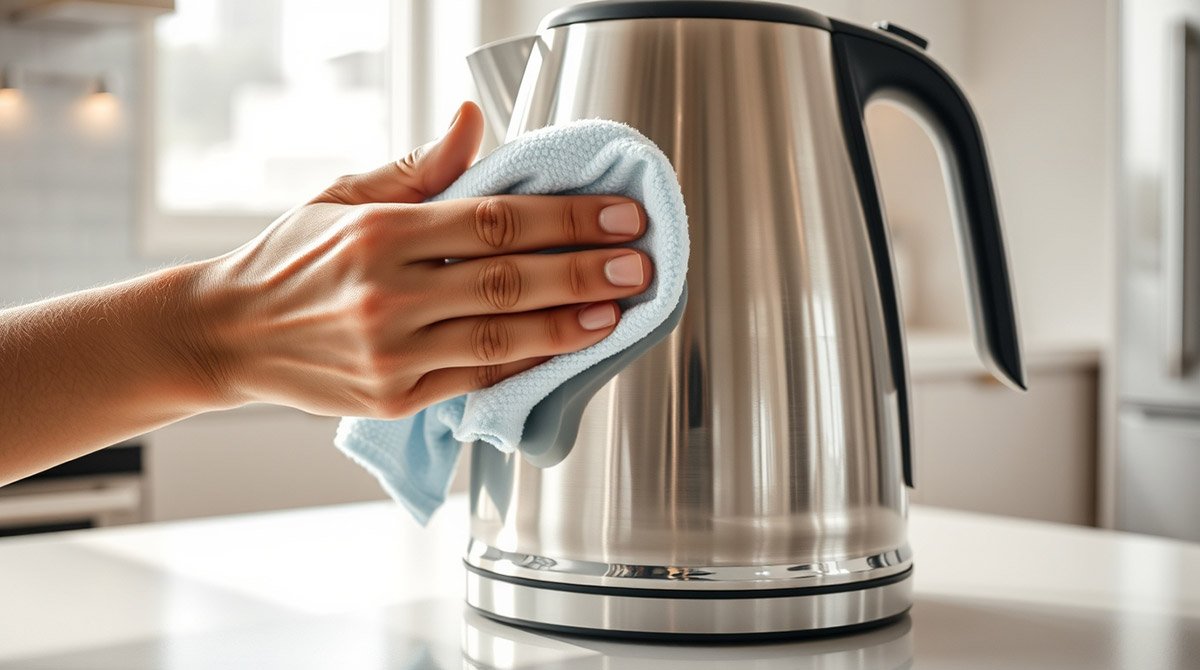
2 – Keep It Clean: Empty and Wipe the Kettle Exterior
Before tackling the inside, keeping the exterior clean ensures your kettle looks good and stays hygienic. A simple wipe can prevent stains and fingerprints while making handling easier.
- Pour out leftover water: Always empty the kettle before cleaning the outside to avoid spills.
- Wipe with a damp cloth: Use a soft, damp cloth to remove dust, stains, or fingerprints.
- Avoid harsh chemicals: Strong cleaners can damage the finish; mild cleaning is enough.
- Dry properly: Use a soft towel to dry the exterior, preventing water marks.
Maintaining the outside regularly helps your kettle stay clean, safe, and visually appealing.
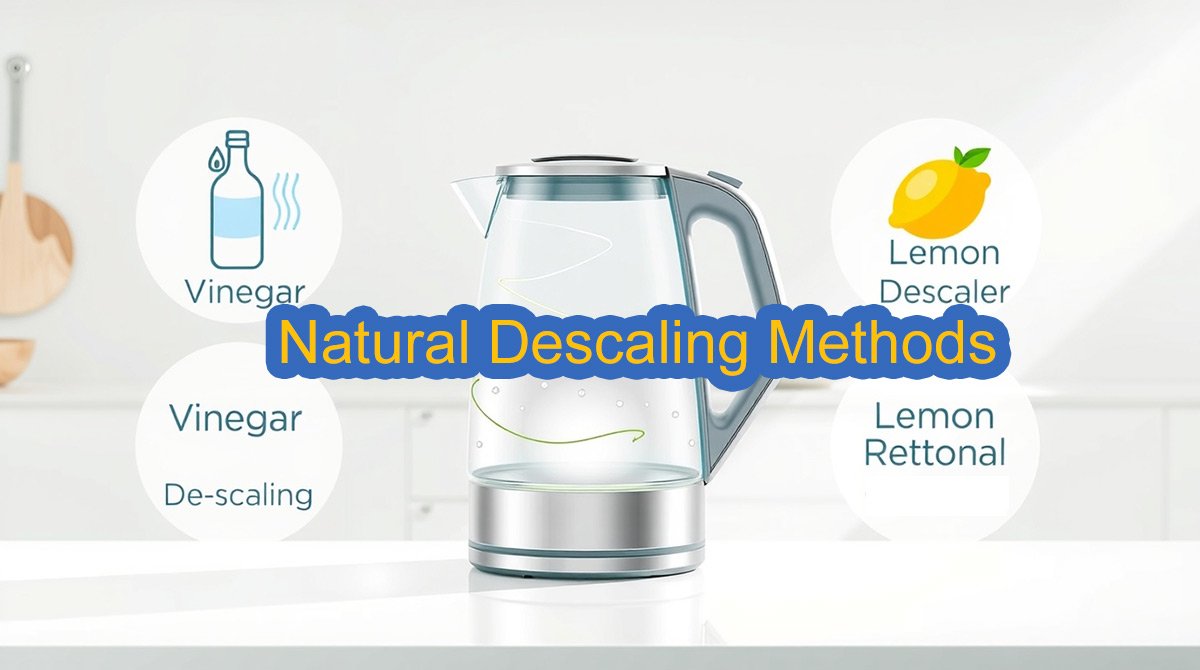
3– Say Goodbye to Limescale: Natural Descaling Methods
Removing limescale is essential to keep your kettle working efficiently and ensure your drinks taste fresh. Here are three natural, safe methods to descale your kettle without harsh chemicals:
- Vinegar Method:
Mix equal parts water and white vinegar, fill the kettle halfway, and bring it to a boil. Let it sit for 15 minutes, then rinse thoroughly. This method removes even stubborn limescale effectively. - Lemon Method:
Squeeze fresh lemon juice into the kettle and add lemon slices with water. Boil, then leave for 10–15 minutes. Lemon not only removes scale but also leaves a pleasant, fresh scent. - Baking Soda Method:
Add 1 tablespoon of baking soda to water, boil, and let it sit for 10 minutes. Baking soda helps remove mild deposits and neutralizes odors naturally.
After descaling, always rinse the kettle 2–3 times with clean water to remove any residue and prevent taste alterations.
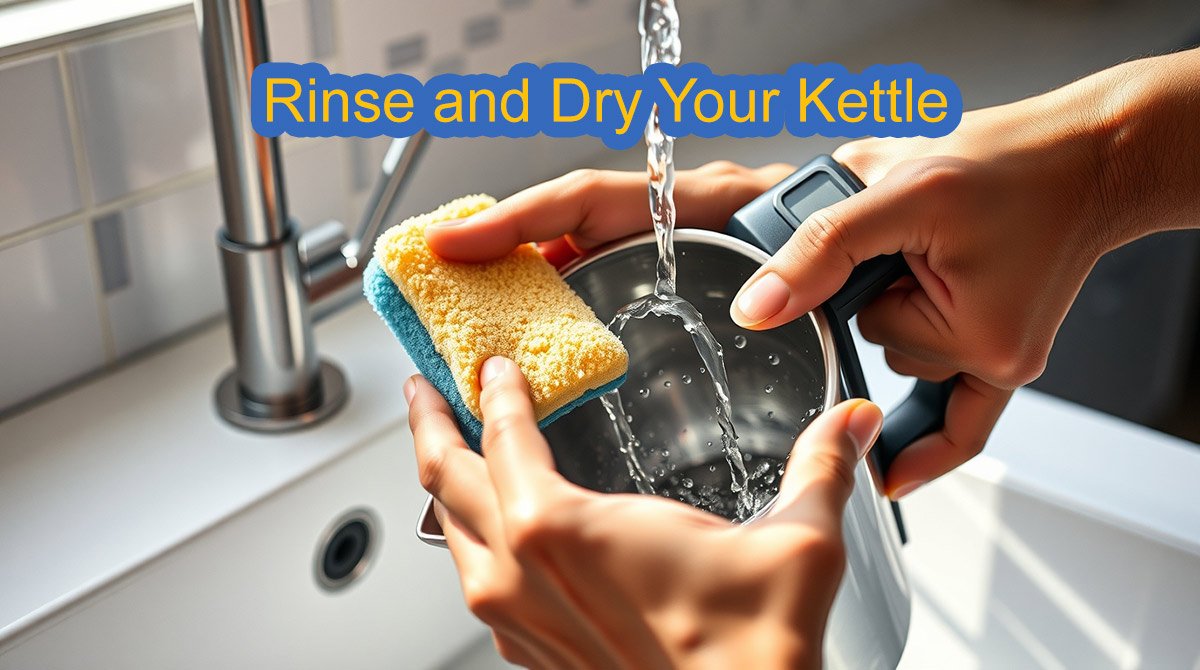
4 – Rinse and Dry: Keep Your Kettle Fresh and Ready
After descaling, proper rinsing and drying are essential to remove residue and maintain a fresh-tasting kettle. Doing this ensures your kettle is safe and ready for daily use.
- Rinse thoroughly: Fill the kettle with fresh water and pour it out 2–3 times to remove vinegar, lemon, or baking soda residue.
- Wipe the inside: Use a soft, clean cloth if needed to remove stubborn deposits.
- Dry completely: Air-dry or use a soft towel to prevent water spots and moisture buildup.
- Check detachable parts: Ensure lids, filters, and other removable components are also rinsed and dried properly.
Proper rinsing and drying help your kettle stay clean, odor-free, and efficient every day.
👉 To read about types of Electric kettles, click here
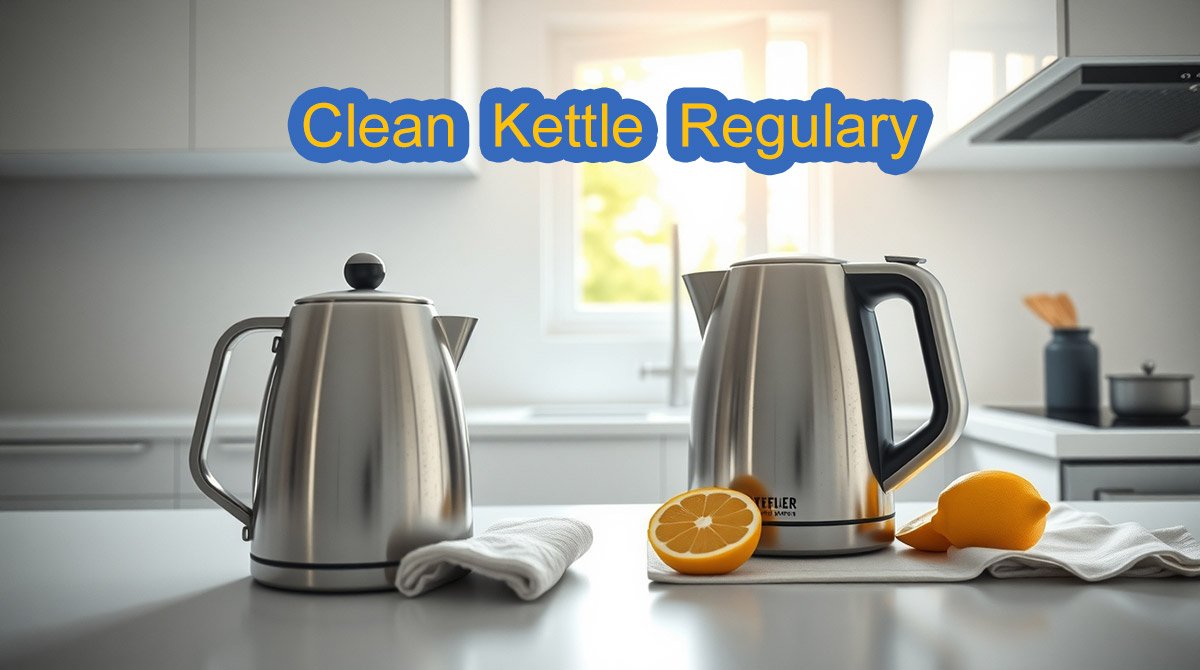
Weekly and Monthly Checks for Longer Kettle Life
Regular maintenance keeps your kettle efficient, safe, and fresh. Use this table to stay on track:
| Check Frequency | What to Do | Benefits |
| Weekly | Empty the kettle daily, wipe outside, and check for stains | Prevents buildup, keeps the kettle visually clean |
| Monthly | Full descale, inspect lid, filter, base, and cord | Maintains efficiency, prolongs kettle lifespan, and ensures safety |
Keeping up with these simple checks ensures your kettle stays fresh, safe, and ready to use every day.
Once your kettle is clean and fresh, why not explore new ways to make the most of it? Read our Electric Kettle Uses Guide to simplify your daily routine with smart, time-saving ideas.
Why Cleaning and Descaling an Electric Kettle Matters
A dirty electric kettle doesn’t just look unpleasant—it can affect your health, drink taste, and appliance performance. Understanding why regular cleaning is essential helps you maintain a safe and efficient kitchen.
- Improves taste: Limescale and mineral deposits can make water taste bitter or stale. Regular cleaning ensures every cup of tea or coffee tastes fresh.
- Boosts efficiency: A kettle with buildup takes longer to boil, wasting time and electricity. Descaling keeps it working at full speed.
- Prevents damage: Mineral buildup can corrode the heating element, reducing the kettle’s lifespan. Routine maintenance keeps it in top shape.
- Promotes safety: A heavily scaled kettle may overheat or cause a malfunction. Clean kettles reduce risk and ensure safe boiling.
Regular maintenance is a small step that gives big benefits, keeping your drinks tasty, your kettle efficient, and your mornings stress-free.
FAQs
You should clean your kettle at least once a month to prevent limescale buildup. In hard water areas, every 2–3 weeks is better. Regular cleaning ensures efficient boiling, fresh taste, and longer kettle life, saving money on replacements.
Yes! Vinegar, lemon, and baking soda are safe, effective, and eco-friendly. They remove limescale, neutralize odors, and leave your kettle tasting fresh. Natural cleaning is also cost-effective and gentle on the appliance.
Most electric kettles are not fully dishwasher-safe. Only detachable parts like filters or lids may be suitable. Always check the manufacturer’s manual, as improper washing can damage the kettle or void warranties.
Beginners often overfill the kettle, use soap inside, or skip regular descaling. These mistakes reduce efficiency and shorten lifespan. Following proper steps and natural cleaning methods avoids issues and keeps the kettle working perfectly.
Regular maintenance prevents limescale buildup, prolonging the kettle’s life and reducing energy costs. Using simple natural methods like vinegar or lemon avoids expensive chemical cleaners. Small habits, like emptying water daily and monthly descaling, save money long-term.
Conclusion
Keeping your electric kettle clean and free of limescale is not just about hygiene—it ensures better-tasting drinks, faster boiling, and longer appliance life. By following these simple steps to clean an electric kettle, you save time, energy, and money while protecting your investment.
With regular care, your kettle will stay fresh, efficient, and safe for daily use. Now that you’ve seen how easy it is, don’t stop here—explore our other guides for smart kitchen hacks, maintenance tips, and appliance care to make your home even more efficient and enjoyable.






- Be Respectful
- Stay Relevant
- Stay Positive
- True Feedback
- Encourage Discussion
- Avoid Spamming
- No Fake News
- Don't Copy-Paste
- No Personal Attacks
- Be Respectful
- Stay Relevant
- Stay Positive
- True Feedback
- Encourage Discussion
- Avoid Spamming
- No Fake News
- Don't Copy-Paste
- No Personal Attacks
