Smart Water Purifier for Household Use: The Modern Way to Pure, Safe Drinking Water
Published: 14 Nov 2025
Water shapes daily life. From morning tea to cooking and washing, the quality of water you use matters more than most people realize. Invisible particles, chlorine, and dissolved minerals quietly affect taste, health, and even your home appliances.
A smart water purifier for household use does more than remove visible dirt. It monitors quality, alerts you when maintenance is due, and protects your family and home. This article explains the real-life benefits, shows how to pick the right system, and gives practical tips for care and troubleshooting.
Why Smart Water Purifier for Household Use Is Important
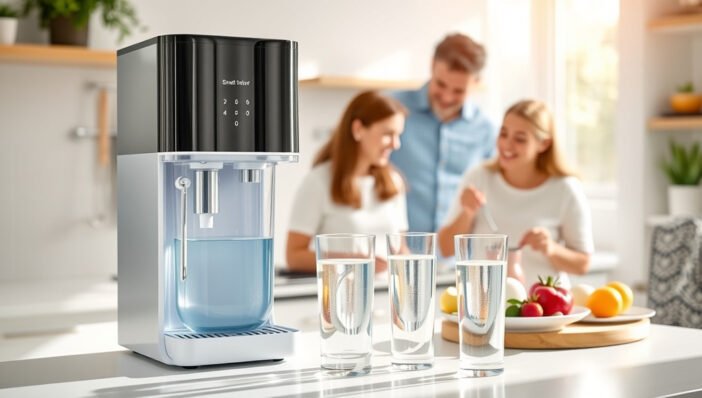
Clean water isn’t just about taste — it’s about safety and health. A smart water purifier ensures your family drinks and cooks with water free from hidden toxins and bacteria. It also prevents scale buildup in appliances, extending their life and saving costly repairs.
Why Upgrade to Modern Filtration
Many households still depend on basic filters or bottled water, which only partly solve the problem. A modern filtration system gives smarter control, real-time monitoring, and reliable purity — ensuring every glass you pour is fresh and safe.
Advanced Filtration Technology
Multi-stage units combine sediment pre-filters, activated carbon, UV sterilizers, and sometimes reverse osmosis. Each stage targets a set of impurities: particles, organic compounds, microbes, and dissolved solids. The layers work together so the end water is safer and more pleasant to drink. Many systems also preserve helpful minerals while removing harmful ones.
Convenience and Peace of Mind
An intelligent system takes routine tasks off your plate. With app alerts or a simple display, you know when to change a cartridge or run a flush cycle. That removes worry — no more guessing if the water is still good. For busy families, that reliability is a major everyday win.
Health Benefits of Using a Water Purifier
Clean water supports the body in many quiet but important ways. When impurities are removed, common complaints like stomach upset, recurring infections, and dry skin can decrease.
Prevent Contaminants and Illness
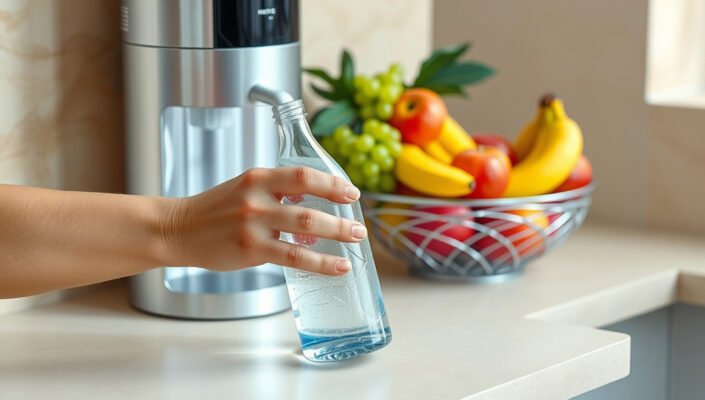
Modern purifiers significantly reduce contaminants such as chlorine, sediment, and heavy metals. This lowers the daily exposure your family faces. For people with sensitive stomachs or weakened immunity, fewer contaminants mean fewer infections and less digestive stress over time.
Better-Tasting and Odor-Free Water
Some tastes and smells come from dissolved chemicals or organic matter. Removing these with activated carbon and proper filtration gives water a fresh, neutral flavor. That subtle change makes beverages taste cleaner — coffee, tea, and soups suddenly become more flavorful.
Healthier Skin and Hair
Hard water minerals and chlorine leave a film on skin and hair. Using filtered water for washing reduces dryness and irritation. Over weeks, many users notice softer skin, fewer hand cracks, and shinier hair. It’s not instant magic — but it is a visible, everyday improvement.
Have you noticed dry skin after long showers? Clean water can make a quiet and steady difference.
Environmental and Household Advantages
Choosing a modern filter has benefits beyond health. It protects the things you own and reduces the environmental footprint of daily water use.
Reduce Plastic Waste
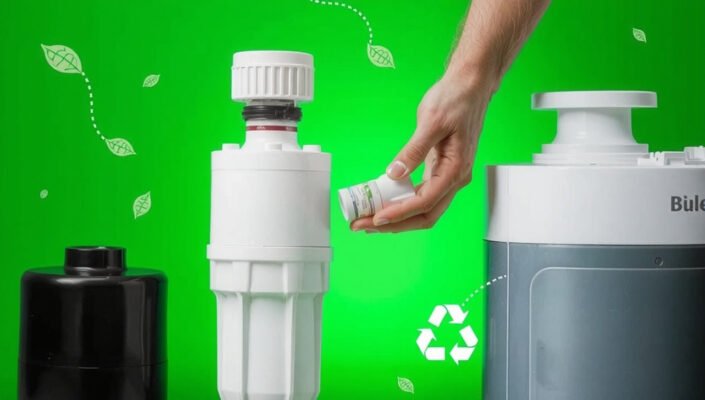
When tap water is reliable and tastes good, bottled water use drops. That means fewer plastic bottles heading to landfills. A household that reduces regular bottled-water purchases helps cut plastic consumption and often saves money over time.
Prevent Plumbing Issues
Hard water causes mineral deposits inside pipes and appliances. Over time, these deposits reduce efficiency and may lead to repairs or replacements. Filtered water lowers scale buildup in kettles, irons, and washing machines — helping systems stay efficient and last longer.
Protect Your Clothing and Laundry
Minerals and residues in tap water wear on fabrics. Purified water helps clothing fibers stay softer and colors look brighter. For families who wash often, this can extend the life of daily and delicate garments.
(Rough example: a family that switches from buying bottled water for daily use can avoid dozens to several hundred plastic bottles a year — a meaningful reduction in waste.)
How Advanced Purification Improves Daily Living
Clean water lifts the quality of small, ordinary moments — morning coffee, preparing baby food, or rinsing fruit. Those moments add up.
Better Cooking and Beverages
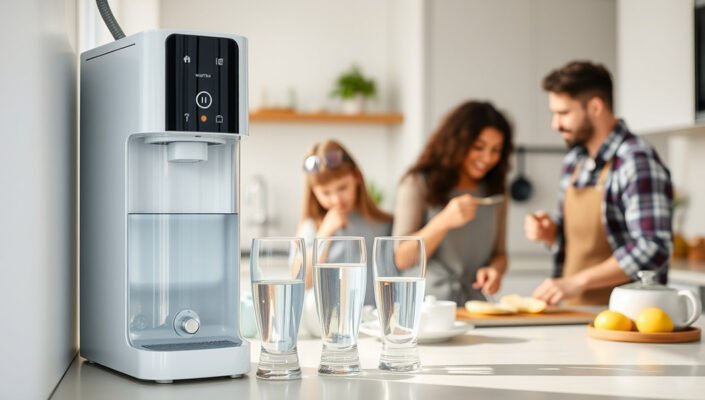
Recipes taste clearer when water isn’t carrying extra flavors. Rice cooks more evenly, soups have purer flavors, and brewed tea or coffee loses the metallic or chlorine aftertaste. These are small but noticeable improvements for anyone who cooks at home.
Less Scale, Fewer Cleanups
Fewer white marks on faucets and dishes means less scrubbing. A cleaner kitchen is a small convenience that becomes a daily relief. Appliances also need less descaling, which saves time and maintenance costs.
Everyday Health Confidence
When you know the water is monitored and cleaned continuously, you gain a quiet freedom. You won’t hesitate to give a glass to a child, refill a bottle, or use tap water for cooking. That confidence is part of why families upgrade.
Comparison: RO vs UV vs UF (mini table)
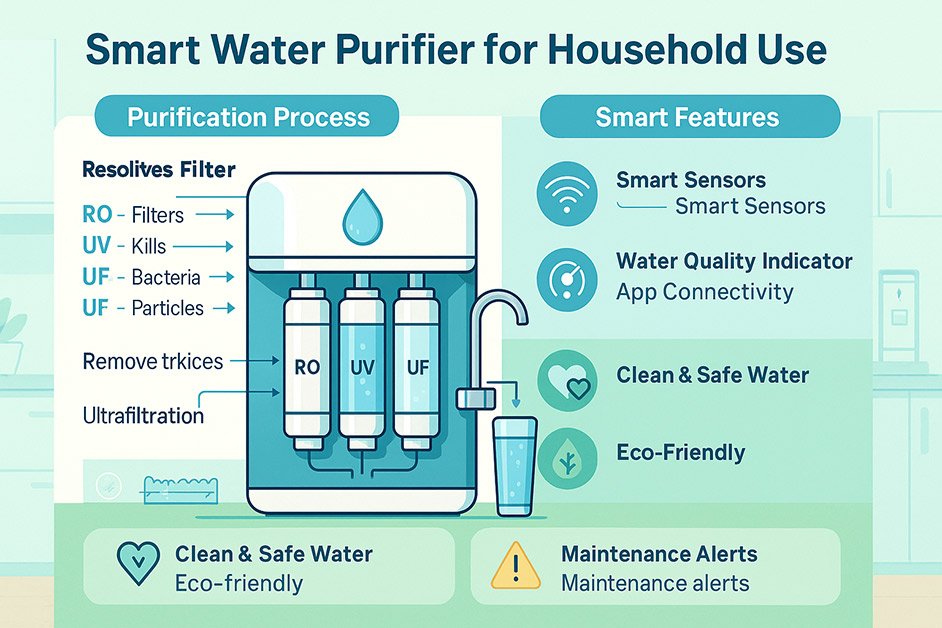
Before choosing a smart water purifier for household use, it helps to understand how different purification types work. Each has unique strengths and limits.
| Type | How It Works | Best For | Limitation |
| RO (Reverse Osmosis) | Filters out dissolved salts, metals, and impurities using a semi-permeable membrane | Areas with hard or salty water | Wastes some water during purification |
| UV (Ultraviolet) | Uses UV light to kill bacteria and viruses | Cities with microbiologically unsafe but low-TDS water | Doesn’t remove dissolved salts or chemicals |
| UF (Ultrafiltration) | Uses fine filters to remove bacteria and larger particles | Homes with relatively clean tap water | Ineffective for dissolved salts or heavy metals |
Use this table as a quick starting point. If you have high TDS or hard water, RO is usually the most thorough choice. For municipally treated water with microbial concerns, UV does the job without stripping minerals.
7 Experts Tips for Choosing the Right Unit
- Test your water source first. Know if you need RO (for hard/saline water), UV (for microbial issues), or UF (for sediment/low pressure).
- Check for app features. Remote monitoring, filter alerts, and water-quality readouts make maintenance easy.
- Choose multi-stage filtration. Look for sediment → carbon → UV/RO stages for broad protection.
- Compare long-term filter costs. Low initial price can hide expensive replacement cartridges — check the yearly maintenance cost.
- Look for energy-saving features. Auto-shutoff and low-power modes reduce bills.
- Buy from brands with good support. Easy access to certified technicians matters when something needs repair.
- Match size to space. Measure installation area first; wall-mounted or compact models suit small kitchens.
Cleaning & Maintenance — Simple Steps
Regular care keeps performance consistent and extends life. Do a few small checks weekly and monthly rather than big repairs later.
- Wipe the exterior weekly with a soft, damp cloth.
- Flush and clean the storage tank monthly using a mild, food-safe detergent. Rinse thoroughly.
- Replace filters as the unit or app recommends. Don’t delay — performance falls off quickly with clogged cartridges.
- Keep the area around the unit dry and dust-free to preserve sensors and electronics.
Troubleshooting: Common Issues and Quick Fixes
Even advanced systems can show small faults. A quick check usually gets them back on track. If an issue persists, follow the “when to call a pro” rule at the end of this section.
Low Water Flow
If water output is slower than usual, the pre-filter could be clogged. Remove and rinse the pre-filter, then flush the system for a few minutes. Replace the filter if it remains slow after cleaning.
Unusual Taste or Odor
A sudden metallic or musty taste often points to a tired filter or a tank that needs cleaning. Run a thorough flush and replace any cartridge that’s past its recommended life. If the taste persists, stop using the tap water for drinking and call support.
Filter Change Alert Won’t Turn Off
If the indicator stays on after a replacement, use the unit’s reset button or the mobile app to clear the alert. If the light remains, consult the manual for model-specific reset steps or contact customer support.
Unit Not Turning On or Intermittent Power
Confirm that the plug and outlet are working by testing another device. If the power supply is fine but the unit stays off, the adapter or internal circuit may be faulty — avoid opening the unit; schedule a technician visit.
When to call a Professional
If water stays discolored, pressure drops across your whole house, or the purifier shows repeated error codes after simple resets, stop using the water for drinking and call a certified technician. Don’t try complex repairs yourself — internal parts are delicate and a small mistake can void warranty coverage.
Quick Water Test — What to Check First
Before buying or maintaining a purifier, test your tap water. A simple check helps you choose the right technology and sets realistic expectations.
- TDS (Total Dissolved Solids): A handheld TDS meter gives a quick reading of dissolved minerals.
- Chlorine smell or taste: Noticeable chlorine suggests municipal treatment — a carbon stage will help.
- Cloudiness or particles: Sediment indicates a need for strong pre-filtration.
- Occasional discoloration: This can mean pipe corrosion or temporary contamination — test multiple times.
A local water lab or inexpensive home kits will give the information you need. Knowing this saves you money by choosing the correct filter type.
FAQs about Smart Water Purifiers
Most cartridges run 6–12 months, depending on usage and water quality. Areas with hard water or heavy sediment may need earlier replacement. Your unit’s app or indicator usually gives the best timing for your conditions.
Basic countertop or compact models can be DIY installed by careful users. For under-sink, RO, or integrated systems, a professional installer ensures seals, fittings, and pressure settings are correct and avoids leaks.
Modern systems aim to remove harmful contaminants but keep beneficial minerals. RO can remove more minerals; many RO systems include a post-mineralization stage to return healthy elements to the water.
TDS measures dissolved salts, minerals, and small particles. Very high TDS can affect taste and appliance life. A moderate TDS level with low harmful contaminants is often acceptable — testing helps you decide.
Filter disposal rules vary locally. Many manufacturers run recycling programs or accept used cartridges for responsible recycling. If no program exists, follow local waste guidelines and consider sealed disposal to limit contamination.
Most units use minimal power. UV and RO stages use more energy than passive filters, but modern designs include energy-saving modes and low-consumption components. Overall, the added cost is usually small compared to convenience and health benefits.
Yes. Clean water is ideal for pet bowls, cooking, and baby formula. It reduces the chance of digestive upset and improves taste across foods and beverages.
Persistent discoloration, strange noises inside the unit, frequent error codes after resets, or a sudden drop in whole-house pressure are signs to call certified support. If these happen, stop using the water for drinking until it is checked.
So guys,
💧 If you loved exploring how a smart water purifier can create a cleaner, healthier lifestyle, why stop here?
🏡 For even more ways to protect your family’s health, check out our latest guide on air purifiers — and discover how clean air and pure water together build a truly healthy home.





- Be Respectful
- Stay Relevant
- Stay Positive
- True Feedback
- Encourage Discussion
- Avoid Spamming
- No Fake News
- Don't Copy-Paste
- No Personal Attacks
- Be Respectful
- Stay Relevant
- Stay Positive
- True Feedback
- Encourage Discussion
- Avoid Spamming
- No Fake News
- Don't Copy-Paste
- No Personal Attacks
