Hand Blender vs. Hand Mixer: Key Differences & Uses
Published: 18 Oct 2025
Many people get confused between a hand blender vs. hand mixer: key differences & uses because they look similar. But their functions are quite different! Knowing which one suits your cooking style can save you time, energy, and counter space.
In this guide, we’ll explain what makes each appliance unique, where they shine, and help you decide which one you truly need in your kitchen.
What Is a Hand Blender?
A hand blender, also known as an immersion blender, is great for blending soups, sauces, and smoothies directly in the pot or bowl. It usually has a single blending blade that liquefies ingredients quickly.
It’s compact, easy to use, and saves you from transferring hot food to a separate blender. Perfect for quick, everyday cooking!
What Is a Hand Mixer?
A hand mixer is mainly used for baking and whipping. It comes with two beaters that mix cake batter, cookie dough, and whipped cream efficiently.
Unlike a blender, it doesn’t chop or puree. It gently mixes ingredients, giving smooth textures for desserts, pancakes, and bread.
Hand Blender vs. Hand Mixer: Key Differences
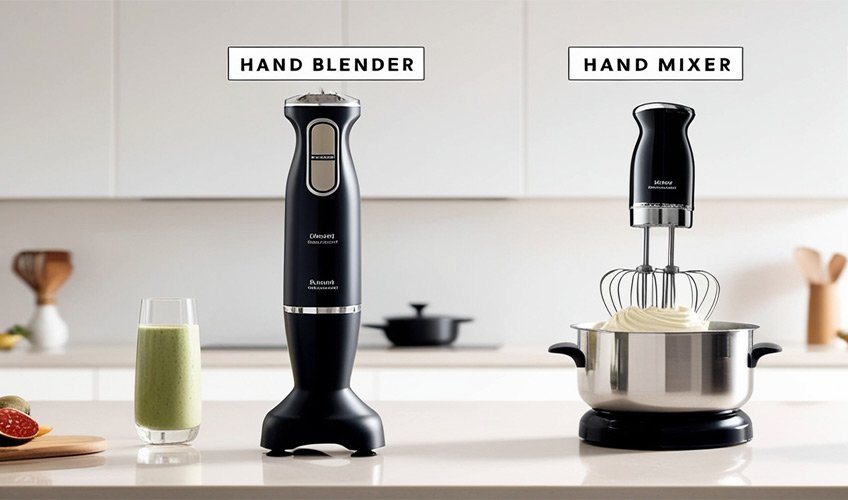
Let’s find out the main differences between these two Kitchen appliances:
| Feature | Hand Blender | Hand Mixer |
| Purpose | Best for blending liquids like soups, sauces, and smoothies | Ideal for baking tasks like whipping cream and mixing dough or batters |
| Attachments | Generally comes with a single-blending blade or whisk attachment | Comes with two beaters and sometimes dough hooks for extra versatility |
| Blades | Sharp and small; it liquefies solid foods quickly | Dull beaters; mix and whisk without cutting ingredients |
| Power & Speed | Higher speed; used for short bursts | Moderate speed; can run longer without overheating |
| Ease of Use | Lightweight, portable, and easy to clean | Slightly heavier but more stable during mixing |
| Cleaning | Just rinse or wipe the blending rod | Needs more cleaning effort due to dual attachments |
| When to Use a Hand Blender |
|---|
|
Wondering when your hand blender truly shines? Here are the best times to grab it for quick and effortless results in the kitchen.
It’s your go-to tool when speed, convenience, and easy cleanup matter most — especially on busy cooking days! |
| When to Use a Hand Mixer |
|---|
|
When you want to bake something delicious or whip up creamy desserts, your hand mixer is the perfect tool to rely on.
If fluffy cakes and smooth batters make you smile, the hand mixer will never let you down! |
Power and Speed Comparison
When it comes to kitchen gadgets, power and speed can make or break your cooking flow. Curious to see how a hand blender vs. a hand mixer really stacks up? Let’s break it down clearly below!
| Aspect | Hand Blender | Hand Mixer |
| Power Range | 200–600 watts, depending on model | 150–400 watts, designed for longer runs |
| Speed Settings | Fewer but stronger speed levels | Multiple speed levels for gentle or fast mixing |
| Performance | Powerful blending for short periods | Consistent mixing over longer durations |
— As you can see, both tools have their strengths.
Cleaning Tips
Keep your hand blender or hand mixer spotless and ready for use with these easy cleaning steps.
- Unplug Before Cleaning: Always ensure safety by unplugging first. Let the blades cool before washing
- Wipe with a Damp Cloth: Clean non-stick or stainless steel parts with a soft, damp cloth. Avoid harsh pads.
- Use Mild Soap: Soapy water works best for sticky food residues.
- Avoid Submerging the Motor: Never immerse the motor body in water; only clean the detachable parts.
- Dry Properly: Air dry before reassembling to prevent rust or odor buildup.
Maintenance Tips
Keep your hand blender or hand mixer running like new with these simple care steps.
- Check Cords Regularly
Inspect the power cord for any signs of wear or tear. If you notice fraying or damage, replace the cord immediately to prevent electrical hazards. - Store in a Dry Place
Keep your hand blender or hand mixer in a dry area. Moisture can harm the motor and cause long-term damage to the appliance. - Lubricate Moving Parts
Occasionally, apply a few drops of oil to any detachable gear parts. This keeps them moving smoothly and reduces wear over time. - Avoid Overuse
Operate the appliance for short periods and let it cool between uses. Continuous use can overheat the motor and affect performance. - Use Proper Attachments
Always match the correct blades or beaters with your appliance. Using the wrong attachment can strain the motor or cause uneven mixing or blending.
Troubleshooting Common Issues
Troubleshooting Common Issues
Even reliable mixer grinders can act up now and then. Don’t worry, most problems are easy to fix once you know where to look!
1. My mixer grinder is not starting.
Check if it’s properly plugged in and the power switch is on. Make sure the jar is locked correctly — most models have safety locks. If it still doesn’t start, inspect the cord or fuse for damage.v
2. The blades aren’t rotating smoothly.
Food particles or thick pastes may be stuck around the blade base. Unplug and clean thoroughly using warm water. If the issue continues, the coupling or bearing might need replacement.
3. The motor smells or overheats.
Stop using it immediately and let it cool for 10–15 minutes. Overheating often happens when overloaded or used for too long. Avoid grinding hard ingredients in large batches.
— So, you can see that most of these issues have quick fixes.
FAQs
Yes, but only for small quantities and softer ingredients like herbs or tomatoes. For thicker or drier chutneys, a mixer grinder performs much better. It gives smoother consistency and faster results.
Hand blenders usually consume between 150–300 watts, so they use less power overall. Mixer grinders are more powerful, so they consume more electricity. If you make small meals or quick blends, the hand blender is a more energy-saving choice.
Not fully. A hand blender is great for light blending tasks like soups, shakes, and sauces. But for grinding spices, making batters, or chutneys, a mixer grinder is essential. Both serve different purposes in the kitchen.
Avoid running it for more than 40 seconds at once. Continuous use can overheat the motor or damage blades. Give it short breaks between batches to maintain smooth performance.
Some brands offer dishwasher-safe jars, but always check your model’s manual. If unsure, hand wash with mild soap and a soft sponge. This helps the rubber seals and blades last longer.
Final Verdict
If possible, own both! Use the mixer grinder for heavy-duty prep and the hand blender for quick blending. This combination saves time, energy, and effort — especially for small kitchens.
— Want to explore more kitchen comparisons? Check out our next guide on the Benefits of using Blenders.






- Be Respectful
- Stay Relevant
- Stay Positive
- True Feedback
- Encourage Discussion
- Avoid Spamming
- No Fake News
- Don't Copy-Paste
- No Personal Attacks
- Be Respectful
- Stay Relevant
- Stay Positive
- True Feedback
- Encourage Discussion
- Avoid Spamming
- No Fake News
- Don't Copy-Paste
- No Personal Attacks
