Cost Breakdown — Are Smart Heaters Worth It?
Published: 1 Dec 2025
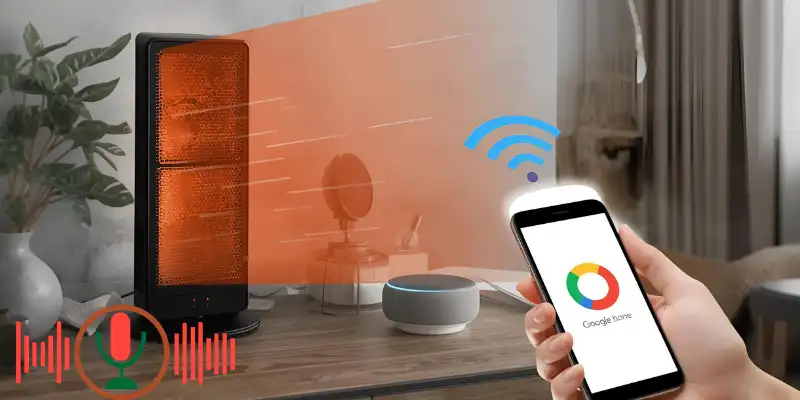
Who doesn’t want a warm, cozy home without breaking the bank? Smart heaters are becoming increasingly popular because they promise energy savings, remote control, and smarter heating than traditional models. But with higher upfront costs, many people wonder: Are smart heaters really worth it?
In this article, we’ll break down the costs, explore the benefits and drawbacks, and review some real-world smart heaters. By the end, you’ll have a clear picture of whether investing in a Next-Gen heaters makes sense for your home.
Understanding Smart Heaters
Smart heaters are more than standard electric heaters. They connect to Wi-Fi, letting you control them via a smartphone app or smart home system like Alexa or Google Home. You can schedule on/off times, adjust temperatures remotely, and use energy-saving modes.
Unlike traditional heaters, smart heaters adjust heat automatically based on room temperature, time of day, or your preferences. Some models also offer eco modes, tip-over protection, and smart sensors for better efficiency.
Key Takeaways:
- Wi-Fi enabled for app or smart home control.
- Remote temperature adjustment and scheduling.
- Eco modes and smart sensors improve efficiency.
- Offers more convenience and savings compared to traditional heaters.
When High-Tech Heaters Makes Financial Sense!
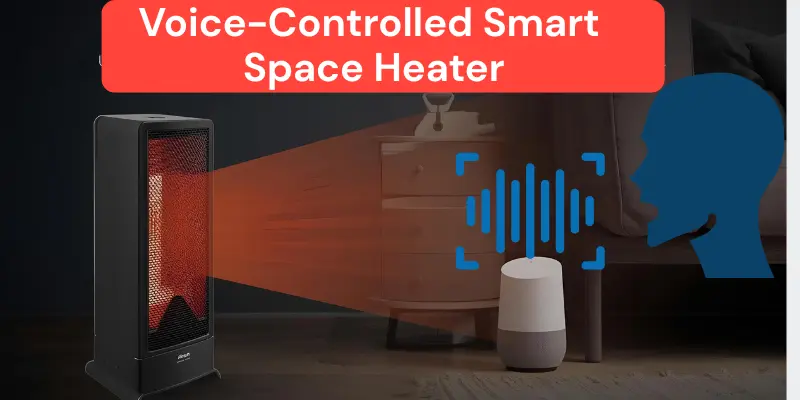
Smart heaters are more than just convenient—they can help you save on energy bills when used strategically. Understanding when and how to use them ensures you get the best value for your money.
1. Heating Specific Zones Instead of the Whole House
If you only need warmth in one room, a smart heater lets you avoid running central heating all day. Using a heater in the living room or bedroom during occupied hours can cut energy costs significantly.
2. Scheduling and Remote Control
Smart heaters can be scheduled to turn on only when needed. This reduces wasted energy from forgetting to switch them off. Remote control via an app adds convenience and ensures your room is warm exactly when you want.
You might also want to check our detailed Air Purifiers: Pros and Cons guide for a full view on how air quality gear compares with heaters.
3. Energy-Saving Modes
Many smart heaters come with eco or adaptive modes. These settings adjust power automatically to maintain comfort while minimizing electricity usage. Over time, this can make the higher upfront cost worthwhile.
4. Temporary Heating Needs
For apartments or rented homes where central heating is limited, these genius heaters can fill gaps efficiently. They allow you to pay only for the space you occupy instead of heating the entire property.
5. Comparing Cost vs. Usage Frequency
Smart heaters make sense if you frequently need supplemental heating. For occasional use, the upfront cost may not justify energy savings. Evaluating your typical heating needs ensures the investment pays off.
Lets see how the cost-effectiveness of a smart heater varies based on how often you use it.
| Usage Frequency | Smart Heater Cost Justification | Recommendation |
| Frequent (daily) | High upfront cost worth it | Good investment |
| Occasional (weekly) | Savings minimal vs. cost | Consider alternatives |
| Rare (monthly) | Cost likely not justified | Not recommended |
Use this table to match your heating needs with cost savings and make an informed smart heater decision.
If you’re still unsure whether a smart heater is right for your home, check out our detailed Smart Space Heater Guide to explore features, benefits, and costs before deciding.
Top 5 Next-Generation Heaters
Choosing the right smart heater can make a big difference in comfort, convenience, and energy savings. Below, we’ve reviewed five top models available in the UK and the US, highlighting their features, pros, cons, and price ranges.
1. Heat Storm HS‑1500‑PHX‑WIFI
This 1,500 W infrared heater is wall-mountable and Wi‑Fi enabled, making it a space-saving and efficient heating solution. It connects via a smartphone app, giving you full control over temperature and scheduling.
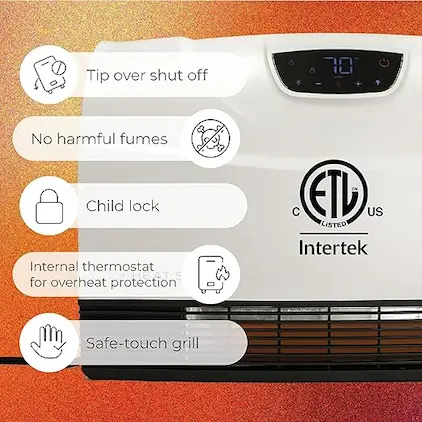
Pros:
- Remote scheduling and control via Wi‑Fi
- Wall-mounted design saves floor space.
- Three power modes: 1,500 W full, 750 W half, and an Eco mode
Cons:
- Fixed installation — not portable.
- Best suited for smaller rooms (e.g., ~150 sq ft)
- Slightly premium up-front cost for a wall unit.
Why We Recommend It:
It’s a smart choice for users who want a permanent, efficient heater for compact spaces — especially bedrooms or home offices — with remote control and scheduling to save energy.
Price Range: Around US $149.99 on the official Heat Storm site.
Buy it: Heat Storm HS‑1500‑PHX‑WIFI Infrared Heater from Amazon.
2. IGENIX IG9515WIFI 1.5 kW SMART PANEL HEATER
This slim, Wi‑Fi-enabled panel heater delivers 1,500 W and works with Alexa for voice control. It can be wall-mounted or freestanding, offering flexible placement in bedrooms, living rooms, or offices.
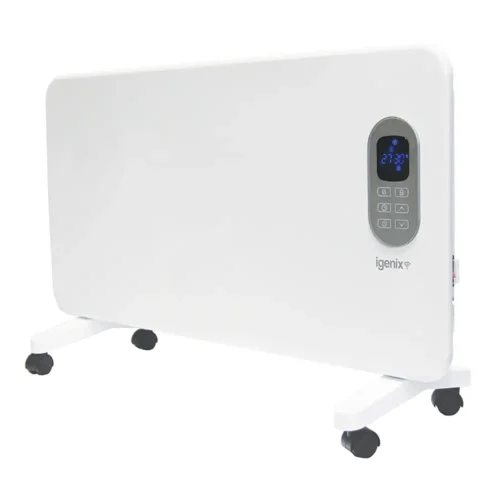
Pros:
- App and voice control via Alexa or Igenix app
- Two power settings (750 W / 1,500 W) for tailored heating
- IP24 rating makes it safe for some moisture-prone areas
Cons:
- Only two heat settings, which may feel limited compared to multi-mode heaters
- Simple design, less visually striking than tower models
- Wi-Fi setup can be tricky for some users
Why We Recommend It:
Perfect for minimalistic spaces where you want reliable, efficient heating with smart controls, without taking up much floor space.
Price Range: ~£109.99 (UK) depending on seller and availability.
Buy it : Igenix IG9515WIFI Smart Panel Heater from Amazon.
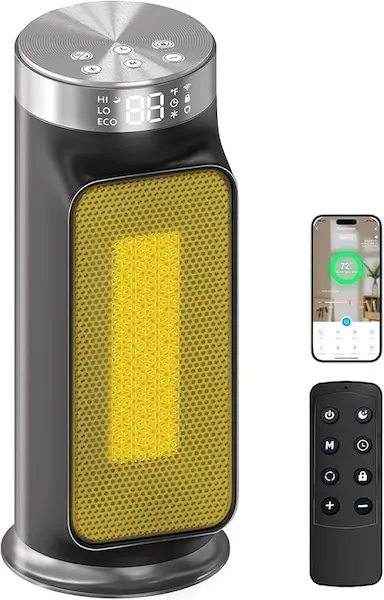
3. DAYETTE 1500 W Tower Smart Heater
This sleek tower heater delivers 1,500 W of power and supports five heating modes. You can use the accompanying app, remote control, or the physical buttons to set schedules, temperature, and more.
Pros:
- Five heating modes + a 24-hour timer.
- App-based control for remote adjustments.
- Even heat distribution from a vertical design.
Cons:
- The app—while useful—has some reported reliability issues.
- Taller design takes more floor space.
- Slightly noisier compared to wall-mounted models.
Why We Recommend It:
A strong option for users who want flexibility in heat settings, scheduling, and real-time remote control. Ideal for bedrooms, living rooms, and spaces you use regularly.
Price Range: Around US $140–200, depending on the seller.
Buy it: 1500 W Smart Electric Space Heater (DAYETTE) from Amazon.
To learn more about how a smart heater works and how it suits your home best, check out our Smart Heater Guide.
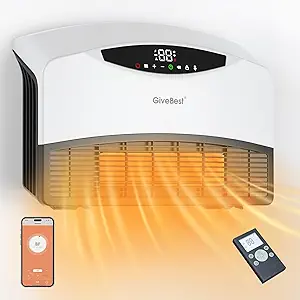
4. GiveBest Smart Wall Heater 1500 W
This 1,500 W heater offers flexible placement — wall-mounted or on the floor — and supports voice commands via Alexa. Reviews highlight its strong safety features and versatile control options.
Pros:
- Multiple control methods: Wi‑Fi app, remote, touch panel, and Alexa voice
- Three heating modes and a programmable thermostat
- Safety features: tip-over shutoff, overheat protection
Cons:
- Requires mounting or stable placement; less portable than purely standalone electric heaters.
- Slightly higher price than basic space heaters.
- Buttons aren’t child-proof, according to user reviews
Why We Recommend It:
It’s ideal for someone wanting a reliable, smart, and safe heater that integrates into their smart home setup without compromising on control or energy savings.
Price Range: ~US $99–150 (varies by Amazon deals and promotions)
Buy it: GiveBest Smart Wall Heater 1500W from Amazon.
5. Philips 5000 Series Smart Tower Ceramic Heater (CX5120/11)
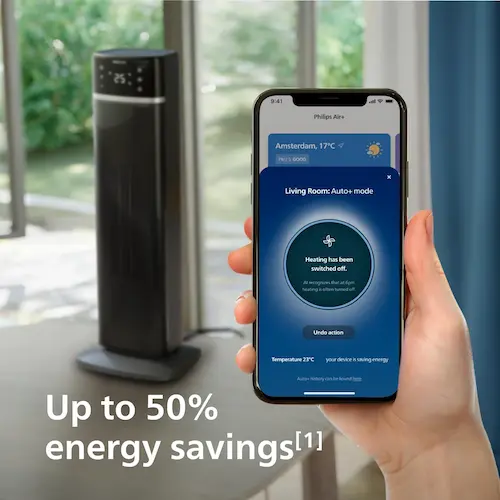
This powerful 2,000 W ceramic heater offers lightning-fast 2-second heat-up. Its Eco AI technology learns your habits to reduce energy use, and you can control it via the Philips Air+ app.
Pros:
- Eco AI mode can save up to 50% energy compared to standard fan heaters.
- Fast heat-up (only 2 seconds) and wide-area 60° oscillation for even warmth.
- Strong safety: tip-over protection, overheat shutoff, auto-off after 24 hours
Cons:
- Higher power draw (up to 2,000 W) means more electricity usage when active.
- The tower design needs more floor space.
- Premium price compared to simpler heaters.
Why We Recommend It:
This is a solid pick for those who want a smart, high-performance heater that can learn your usage patterns, save you energy, and maintain safety with advanced protection.
Price Range: Around £96.99 (or equivalent in other markets).
Retail / UK Source: Philips store: £99.99
Buy it: Philips 5000 Series Smart Tower Ceramic Heater (CX5120/11)
Note:
- Prices vary depending on the seller, discounts, or location.
- Always check current availability and shipping for your target market
FAQs
Yes, smart heaters can be more energy-efficient because they allow precise temperature control, scheduling, and eco modes. They heat only the areas you use, reducing wasted electricity. Over time, this targeted heating can lower your energy bills compared to traditional space heaters.
Many smart heaters support voice assistants like Alexa or Google Assistant. This allows you to turn them on/off, adjust temperature, or set schedules using simple voice commands. It’s a convenient way to manage heating without needing to walk over to the device.
Most smart heaters include safety features like tip-over protection, overheat shutoff, and auto-off timers. While these make them generally safe, it’s still recommended to follow the manufacturer’s instructions. Avoid covering the heater or placing it near flammable objects.
Yes, if used properly. By scheduling heating only when needed, using eco modes, and targeting specific rooms, smart heaters reduce unnecessary energy use. However, the savings depend on your usage patterns and local electricity costs.
Check the heater’s wattage and recommended coverage area. Small rooms typically need 1,200–1,500 W, while larger rooms may require 1,800–2,000 W. Also, consider features like oscillation, timers, and smart control to match your comfort and efficiency needs.
Final Thoughts on Smart Heater Costs
Smart heaters can be a worthwhile choice when you want better control, targeted heating, and lower energy waste. They offer comfort without running your whole heating system, which can make a real difference in monthly bills. The key is choosing a model that fits your room size and daily routine.
My recommendation is to focus on practical features instead of the most advanced ones. This helps you avoid overspending while still getting reliable performance. As technology improves, smart heaters will only become more efficient, giving you even better value in the future.






- Be Respectful
- Stay Relevant
- Stay Positive
- True Feedback
- Encourage Discussion
- Avoid Spamming
- No Fake News
- Don't Copy-Paste
- No Personal Attacks
- Be Respectful
- Stay Relevant
- Stay Positive
- True Feedback
- Encourage Discussion
- Avoid Spamming
- No Fake News
- Don't Copy-Paste
- No Personal Attacks
