How to Clean a Humidifier (Complete Easy Guide for Every Type)
Published: 29 Nov 2025
Keeping your humidifier clean is the best way to enjoy fresh, healthy mist every day. If you’ve ever wondered how to clean a humidifier without damaging it, you’re in the right place. In this guide, you’ll learn simple, safe, and effective methods that work for all types—including portable humidifiers, ultrasonic units, and mini USB models.
A clean humidifier not only performs better but also keeps your home’s air healthier. Ready to get started? Let’s walk through everything step by step.
What You Need Before You Start (Basic Supplies List)
Before you begin cleaning, gather a few essential items to ensure the process is safe and effective. Having everything ready saves time and ensures you won’t damage your humidifier.
You’ll need:
- White vinegar – excellent for removing mineral buildup.
- Bleach or hydrogen peroxide – for deep disinfection.
- Soft brush or toothbrush – to scrub hard-to-reach areas.
- Dish soap – mild soap for everyday cleaning.
- Microfiber cloth – for wiping and drying surfaces.
- Distilled water – reduces scale and keeps the mist clean.
These basic supplies are usually found at home, so you won’t need special products. Portable humidifiers or mini units require the same items, just in smaller amounts.
How to Clean a Humidifier Safely and Effectively
Keeping your humidifier clean is essential for healthy air and optimal performance. Over time, water, dust, and minerals can build up inside the tank and base, causing odors, bacterial growth, and reduced mist output. Following a safe cleaning routine ensures your unit works efficiently and lasts longer, whether it’s a full-size model or a portable humidifier.
Below is a simple step-by-step checklist you can follow to clean your humidifier effectively without damaging it.
Step-by-Step Checklist
- ✅ Unplug and Empty the Water Tank
Always disconnect your humidifier before cleaning to prevent accidents. Empty any leftover water completely, as stagnant water can quickly grow bacteria and reduce efficiency. - ✅ Rinse Tank and Base with Warm Water
Rinse thoroughly to remove dust, debris, and loose mineral deposits. Make sure to reach every corner of the tank and base to prevent buildup that can affect mist quality. - ✅ Scrub with Mild Dish Soap
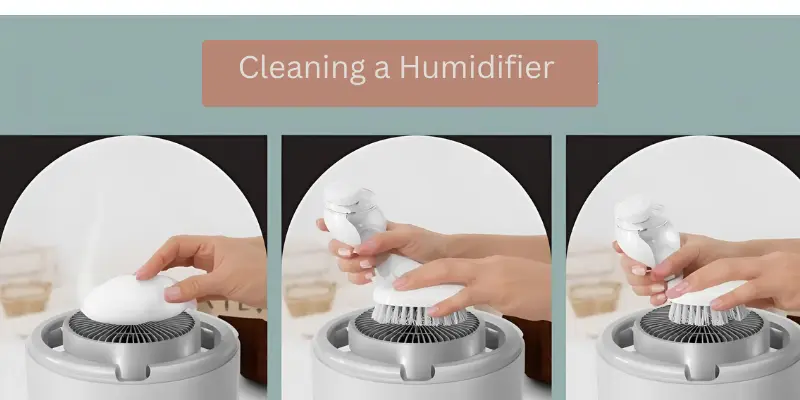
Add a few drops of mild dish soap and gently scrub the tank and base with a soft brush or sponge. This removes daily grime and keeps your humidifier looking and smelling fresh. - ✅ Prepare for Mineral Buildup Cleaning
If you notice white deposits or scale, you’ll want to use a special solution. For detailed guidance, see the next section on cleaning with vinegar. - ✅ Rinse and Air-Dry Completely
Rinse all parts with distilled water to remove any soap residue. Wipe with a microfiber cloth and allow air-drying completely before reassembling to prevent mold growth.
If your unit still isn’t performing well even after a deep clean, check this portable humidifier troubleshooting guide to diagnose common issues easily.
How to Clean a Humidifier with Vinegar (Simple Mineral Scale Removal)
Vinegar is a natural and safe solution for removing stubborn mineral deposits from your humidifier. Over time, minerals in tap water can leave white scale on the tank and base, reducing mist output and making your unit less efficient. Using vinegar helps dissolve these deposits without damaging the plastic or internal parts.
Why Vinegar Works
White vinegar contains acetic acid, which gently breaks down mineral buildup and residue. It’s safe for most humidifiers, including portable humidifiers, and avoids harsh chemicals that can leave odors or damage your unit.
How to Soak the Tank
- Mix equal parts white vinegar and warm water.
- Fill the tank halfway or enough to cover the affected areas.
- Let it sit for 20–30 minutes to dissolve mineral deposits.
- Use a soft brush to scrub any remaining buildup.
Vinegar cleaning is an easy, effective method to keep your humidifier running efficiently. After soaking and scrubbing, rinse all parts thoroughly with distilled water and air-dry completely before reassembling.
How to Clean a Humidifier with Bleach (Deep Disinfection Method)
Bleach is a powerful disinfectant that can remove mold, bacteria, and stubborn odors from your humidifier. It’s especially useful when your unit has been neglected or shows signs of microbial growth. Using bleach safely ensures a deep clean without harming your humidifier.
When to Use Bleach
- If your humidifier emits a musty or moldy smell.
- When visible mold appears inside the tank or base.
- To disinfect a portable humidifier after long-term storage.
Safe Bleach Solution
- Mix 1 teaspoon of bleach with 1 gallon of water.
- Pour the solution into the tank, making sure it covers all areas with potential mold or bacteria.
- Let it sit for 15–20 minutes.
After cleaning your humidifier, you may also want to check out the best humidifiers for bedrooms to see which models perform the strongest.
Rinsing and Drying
After soaking, rinse all parts thoroughly with distilled water to remove bleach residue. Wipe down with a microfiber cloth and allow the unit to air-dry completely before using again. This prevents lingering odors and ensures safe mist for your home.
Using bleach occasionally for deep disinfection keeps your humidifier hygienic and extends its lifespan.
If you love keeping things spotless, then after cleaning your humidifier, check out this quick guide on how to clean a convection oven.
Alternative Methods to Clean a Humidifier
If you prefer not to use vinegar, there are safe alternatives to keep your humidifier clean and odor-free. These methods work well for daily maintenance or for units sensitive to acidic solutions.
Using Hydrogen Peroxide
Hydrogen peroxide is a gentle disinfectant that kills bacteria and mold. Mix 1 teaspoon of 3% hydrogen peroxide with 1 cup of water, pour it into the tank, let it sit for 15 minutes, then scrub lightly and rinse thoroughly.
Using Baking Soda
Baking soda helps remove mild stains and neutralizes odors. Add 1–2 teaspoons of baking soda to warm water, fill the tank, let it sit for 10–15 minutes, scrub gently, and rinse well.
When to Use These Alternatives
- For daily or weekly maintenance without strong chemicals.
- On delicate or portable humidifiers that may be damaged by vinegar.
- When a fresh, odor-free mist is the priority.
These alternative cleaning methods are safe, easy, and effective, helping your humidifier run smoothly without harsh chemicals.
Cleaning a Portable Humidifier (Mini & USB Types)
Portable humidifiers are compact and convenient, but their small tanks and tight spaces make them prone to mineral buildup and mold. Regular cleaning ensures they continue to deliver clean mist and prevents odors or bacteria from spreading in your home.
Cleaning Tight Spaces
Use a small soft brush, cotton swabs, or a toothbrush to reach corners and crevices inside the tank and nozzle. This helps remove dust, scale, and residue that larger units may not accumulate.
Cleaning Filters and Wicks
Many portable humidifiers have removable filters or wicks. Rinse these under warm water weekly, and replace them according to the manufacturer’s instructions to maintain efficient performance.
Preventing Mold in Portable Units
Empty and dry the tank after every use, especially if storing the unit for a few days. Using distilled water reduces mineral deposits and helps prevent microbial growth, keeping your portable humidifier safe and fresh.
Tips for Different Humidifier Types
Different humidifiers have unique features, so following specific tips ensures safe and effective cleaning for each type:
- Portable humidifiers: Use a smaller container or cup to soak tight spaces.
- Ultrasonic units: Avoid getting the electrical base wet; soak only removable parts.
- Mini USB humidifiers: Use cotton swabs or small brushes to reach tiny crevices.
Following these tips ensures every type of humidifier stays clean, efficient, and delivers healthy mist consistently.
Cleaning & Maintenance Schedule
A consistent cleaning routine keeps your humidifier running efficiently and prevents odors, bacteria, or mineral buildup. Follow this schedule to maintain fresh, clean mist all year.
| Frequency | What to Do | Why It Matters |
| Daily | Empty the water tank, rinse with warm water, and dry completely | Prevents stagnant water, reduces bacteria and mold growth |
| Weekly | Scrub tank and base with mild soap, rinse thoroughly | Removes daily grime and mineral buildup, keeps mist fresh |
| Weekly (Optional) | Soak the tank in a vinegar solution for 20–30 minutes | Dissolves mineral deposits and scale for better performance |
| Monthly | Deep clean with bleach or hydrogen peroxide (for mold/odor) | Kills bacteria, mold, and lingering odors, ensuring hygienic use |
| As Needed | Replace filters, wicks, or other removable parts | Maintains optimal performance, prevents blockages or reduced mist |
| Seasonal Storage | Clean thoroughly, rinse, dry, and store in a dry place | Prevents mold or odor buildup during long periods of non-use |
Following this schedule consistently ensures your humidifier stays clean, efficient, and safe to use all year round.
After cleaning your humidifier, don’t forget to check our full guide on how to clean an air purifier properly for fresher indoor air.
Why You Need to Clean Your Humidifier Regularly
A humidifier may look clean from the outside, but inside it can collect minerals, bacteria, and mold if not washed often. These tiny particles mix into the mist and spread around your room. That’s why regular cleaning is essential for healthier air and better performance.
When a humidifier stays dirty, it can start producing unpleasant odors, white dust, or reduced mist output. Portable humidifiers are even more sensitive because their small tanks build up residue faster. A clean unit always runs smoother, lasts longer, and keeps your space comfortable.
Frequently Asked Questions (FAQs)
You should rinse and dry the water tank daily, scrub with mild soap weekly, and do a deep clean with vinegar or bleach monthly. Regular cleaning prevents bacteria, mold, and mineral buildup, keeping your humidifier safe and efficient.
Yes, but only for deep cleaning when mold or odor appears. Use a very diluted solution (1 teaspoon bleach per 1 gallon of water) and rinse thoroughly afterward. Avoid soaking any electrical components. Always make sure the tank is completely dry before reassembling and using the humidifier again to ensure safety.
Vinegar is safe for most tanks, including portable units. It effectively dissolves mineral deposits without harsh chemicals. However, avoid letting vinegar touch sensitive electronic parts and always rinse well before use.
No. Distilled water reduces mineral buildup, but bacteria and mold can still grow in a moist tank. Regular cleaning is essential, even with distilled water, to ensure a healthy mist. Following a routine keeps both your air and humidifier safe.
Empty and dry the tank after every use, clean it weekly with mild soap, and use distilled water when possible. For portable humidifiers, make sure to reach tight corners with a small brush or cotton swab.
Enjoy Clean Mist Every Day
Keeping your humidifier clean is essential for healthy air and efficient performance. Daily rinsing and weekly scrubbing, along with vinegar or bleach for stubborn buildup, make a big difference. Portable humidifiers need extra care due to their small tanks, but the steps are simple. Following a consistent routine helps your device last longer and work better.
By maintaining your humidifier regularly, you ensure fresh mist and prevent odors. A clean humidifier is not just about comfort—it’s about health too.






- Be Respectful
- Stay Relevant
- Stay Positive
- True Feedback
- Encourage Discussion
- Avoid Spamming
- No Fake News
- Don't Copy-Paste
- No Personal Attacks
- Be Respectful
- Stay Relevant
- Stay Positive
- True Feedback
- Encourage Discussion
- Avoid Spamming
- No Fake News
- Don't Copy-Paste
- No Personal Attacks
