Difference Between a Convection Microwave Oven and a Baking Oven
Published: 19 Nov 2025
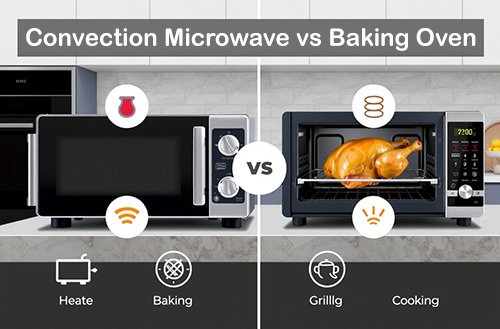
Choosing the right oven can be confusing, especially when names sound similar. The difference between a convection microwave oven and a baking oven lies in how they cook, the type of food they handle best, and the results you get.
If you love baking cakes or roasting chicken, you might wonder — which one should you bring home? Let’s clear up the confusion so you can pick the oven that truly fits your cooking style and kitchen space.
What Is a Convection Microwave Oven?
A convection microwave oven combines two technologies — microwave heating and convection baking. It uses microwaves to heat food quickly and has a built-in fan with a heating element to circulate hot air evenly. This means it can cook, grill, and bake in one appliance.
It’s a smart choice for small kitchens or people who want quick results. You can bake cookies, roast vegetables, or even grill fish using the same unit. However, because of its compact size, the baking capacity is smaller compared to a full-sized baking oven.
If you want a deeper dive into the mechanics and features of convection microwave ovens — how they circulate hot air, the key components, and more — check out this full guide on Microwave Convection Oven
What Is a Baking Oven?
A baking oven is a traditional appliance designed mainly for baking, roasting, and grilling. It uses electric or gas heating elements to create even, steady heat throughout the cavity. This allows food to cook from all sides and achieve perfect browning and texture.
Baking ovens are ideal for those who love baking cakes, bread, and pastries. They offer better temperature control and consistent results compared to smaller convection microwaves. While they take up more space, they deliver professional-level baking performance.
Before choosing between the two, it helps to understand how they differ in heating, space, price, and performance. Once you know these distinctions, picking the right oven for your kitchen becomes much easier.
Key Differences Between a Convection Microwave and a Baking Oven
Though both ovens can bake and roast, they work differently and suit different cooking needs. Here’s a clear breakdown of their main differences:
| Feature | Convection Microwave Oven | Baking Oven |
| Heating Method | Uses microwave energy + fan for hot air circulation | Uses electric or gas heating elements |
| Best For | Reheating, grilling, and light baking | Bread, cakes, pizzas, and roasting |
| Cooking Time | Faster, saves 20–30% time | Slower but gives an even texture |
| Space Need | Compact, ideal for small kitchens | Needs more countertop or built-in space |
| Baking Quality | Good for basic baking | Excellent for consistent results |
| Energy Use | More efficient | Slightly higher power consumption |
| Price Range | Usually affordable | Often more expensive but durable |
Cooking Performance
A convection microwave cooks faster using hot air and microwaves together. However, the baking oven provides more even heat, making it better for bread, cakes, and pastries that need a consistent texture and rise.
Space and Cost
If you have limited kitchen space, a convection microwave is compact and versatile. Baking ovens, on the other hand, are bulkier but built for long-term durability and professional-style baking.
Ease of Use
Microwave ovens are simpler to operate — just set the time and mode. Baking ovens require more manual temperature control but reward you with richer flavors and textures.
Which One Is Better for Home Use?
The right oven for your home depends on how you cook and bake. If you mostly reheat food, grill snacks, or bake occasionally, a convection microwave oven is a smart and space-saving option. It’s faster, easier to use, and perfect for everyday cooking.
However, if baking is your passion or you bake often for family and friends, a baking oven gives you better results. Its consistent temperature and larger space make it ideal for cakes, breads, and roasted meals.
Think about your routine — do you bake once a month or every weekend? Your answer will help you decide which oven truly fits your lifestyle.
While convection ovens and traditional baking ovens have different heating methods, understanding how each works can help you get perfect results. For a quick guide on using a baking oven effectively, check out How to use a Baking Oven
Smart Ways to Operate Convection and Baking Ovens
Before we dive into the details, here are some smart ways to operate both convection and baking ovens for the best results.
Using a Convection Microwave Oven
Start by selecting the right mode — microwave, convection, or a combination. Always preheat the oven before baking for even results. Use microwave-safe glass or silicone bakeware instead of metal trays.
Mini tip: Avoid overcrowding the oven; proper air circulation helps food cook evenly and brown better.
Using a Baking Oven
Set the desired temperature and allow the oven to preheat fully before placing food inside. Use the middle rack for balanced heat and perfect texture. Baking ovens work best with aluminum or steel trays.
Mini tip: Keep an oven thermometer handy to ensure accurate temperature control during baking.
Which Oven Is Easy to Clean and Maintain
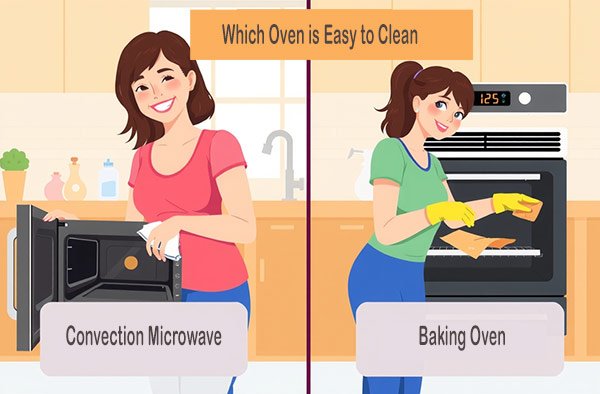
let’s see which oven is easier to clean and maintain for daily use.
Convection Microwave Oven
A convection microwave oven is easier to clean and maintain because of its smaller size and smoother interior. Most models come with steam-clean or deodorizing functions that remove odors quickly. Since spills dry faster, a simple wipe with a damp cloth keeps it fresh and spotless.
Mini tip: Clean right after cooking to prevent stains from setting on the interior walls.
For a detailed cleaning guide on convection ovens — including step‑by‑step methods and home cleaning hacks — visit our detailed and easy guide on how to clean a convection oven
Baking Oven
A baking oven needs more effort to clean, especially after long baking sessions. Food splatters, crumbs, and grease can collect on racks and trays. However, deep cleaning with baking soda and vinegar works well for removing buildup. You can also use the self-cleaning mode if your oven has one.
Mini tip: Line trays with parchment paper to reduce mess and make cleanup quicker.
FAQs:
A baking oven gives more consistent results for cakes, bread, and pastries. Convection microwaves bake faster but may not brown evenly. For serious bakers, a baking oven is the better choice. For quick baking, go with convection.
You can bake most items like cookies and pizzas in a convection microwave. But dense desserts like sponge cakes may not rise properly. Adjusting time and temperature helps improve results. Always keep an eye on the baking progress, as each recipe may need slight tweaks.
Convection microwaves are easier to clean due to their small size and removable tray. Baking ovens need regular deep cleaning after greasy or heavy use. Choose based on your cooking habits. Regular maintenance also helps extend the life of both types of ovens.
Convection microwaves use less electricity as they cook faster. Baking ovens take longer and consume more power to maintain heat. Energy efficiency depends on your usage pattern. Using preheating wisely and cooking in batches can save energy. Always check the wattage before buying to estimate power use.
Baking ovens generally last longer because they have fewer electronic parts. Convection microwaves wear out faster if used daily for heating and baking. Regular maintenance extends their lifespan. Always keep vents clean and avoid overloading the oven. Quality brands with durable interiors tend to last several years longer.
Which One Should You Choose?
Understanding the difference between a convection microwave oven and a baking oven helps you pick the right one for your kitchen. A convection microwave is faster, compact, and perfect for daily cooking. A baking oven, on the other hand, gives professional baking results and more even browning.
If you bake often, go for a dedicated baking oven for consistent texture and taste. But if you want a multipurpose appliance for reheating, grilling, and light baking, a convection microwave is the smarter choice.
Both have their strengths — it really depends on your cooking style. Keep exploring your kitchen gadgets, folks, because the right oven can make every recipe simpler and more delicious.






- Be Respectful
- Stay Relevant
- Stay Positive
- True Feedback
- Encourage Discussion
- Avoid Spamming
- No Fake News
- Don't Copy-Paste
- No Personal Attacks
- Be Respectful
- Stay Relevant
- Stay Positive
- True Feedback
- Encourage Discussion
- Avoid Spamming
- No Fake News
- Don't Copy-Paste
- No Personal Attacks
