Rice Cooker Vs Pressure Cooker for Rice — Which Makes Better Rice?
Published: 15 Nov 2025
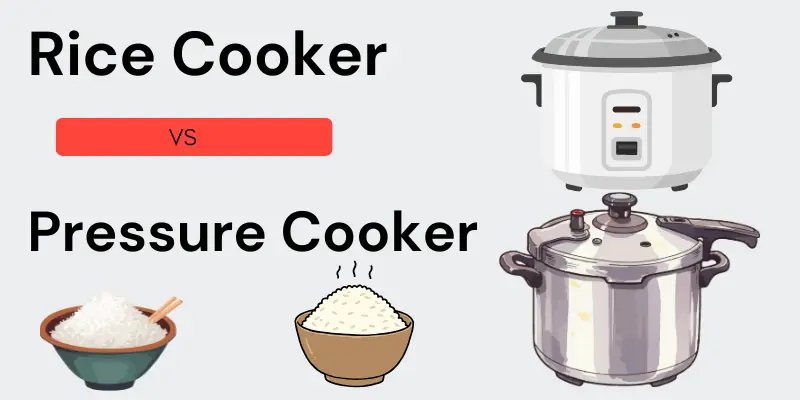
Choosing between a rice cooker and a pressure cooker for rice can be tricky. Both promise fluffy, perfectly cooked grains — but they work differently.
This guide breaks down how each performs in taste, texture, time, and ease, so you can decide which one truly fits your kitchen routine.
Rice cookers are known for their set-and-forget simplicity, while pressure cookers win on speed and versatility. But when it comes to rice, the small differences in heat and pressure can make a big change in flavor and texture. Curious which one gives the best results for your style of cooking? Let’s compare them side by side.
Rice Cooker vs Pressure Cooker for Rice
Before diving into the details, here’s a quick look at how these two kitchen tools differ. This table highlights key points like speed, texture, and ease of use — so you can spot what matters most to you at a glance.
| Feature | Rice Cooker | Pressure Cooker / Multi-Cooker |
| Cooking Time | 20–40 minutes (varies by type) | 8–15 minutes (faster cooking) |
| Texture | Consistent, fluffy, or sticky | Very soft, sometimes glossy |
| Ease of Use | Simple, automatic shutoff | Needs timing and pressure release |
| Versatility | Ideal for rice and grains | Handles rice, beans, stews, and meats |
| Energy Use | Efficient for small portions | Saves time and energy for larger meals |
| Safety | Fully safe with built-in thermostat | Requires care with steam release |
| Maintenance | Easy to clean, removable pot | Needs valve and seal checks |
| Best For | Every day rice eaters | Busy families or multi-purpose cooking |
Each has its strengths — the rice cooker shines in simplicity, while the pressure cooker wins in speed and versatility.
Quick Takeaway:
- Choose a rice cooker if you want consistent, fluffy rice every time.
- Pick a pressure cooker if you value speed and want one appliance for many dishes.
Now, let’s see how their cooking methods actually work and affect your rice.
How They Work: Cooking Mechanism and Functionality
Both cookers make rice delicious, but they do it in very different ways. Understanding how each one cooks can help you pick the one that best matches your cooking style.
Rice Cooker Basics
A rice cooker uses steady, gentle heat to boil water and steam the rice until it’s perfectly cooked. It automatically switches to “keep warm” mode when all water is absorbed.
This results in fluffy, separate grains — ideal for white or jasmine rice. Most models now include settings for brown rice, porridge, or sushi rice, too.
A rice cooker is like your “set it and forget it” buddy — just add rice, water, and press start.
Pressure Cooker Basics
A pressure cooker traps steam inside a sealed pot, raising the boiling point of water. This higher temperature cooks rice much faster — in almost half the time.
It’s great for brown rice, wild rice, or mixed grains that need longer cooking. Modern electric versions (like Instant Pot) offer preset rice modes, taking the guesswork out.
However, pressure cooking can make rice slightly softer, which some people love — and others may find too mushy.
Cooking Performance and Rice Texture
When it comes to rice, it’s not just about cooking fast — it’s about getting the right texture, flavor, and consistency. Here’s how both cookers perform in real use.
Cooking Time
- Rice Cooker: Takes 20–40 minutes depending on rice type. It cooks slowly with gentle steaming for even doneness.
- Pressure Cooker: Finishes rice in 5–10 minutes under high pressure. Perfect for busy mornings or quick dinners.
👉 Verdict: Pressure cookers win on speed, but rice cookers offer better precision.
Rice Texture
- Rice Cooker: Produces light, fluffy rice with each grain separate — ideal for fried rice, sushi, or side dishes.
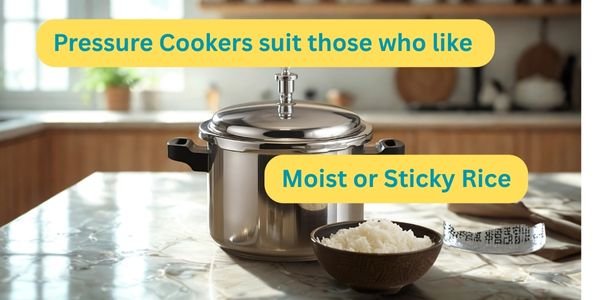
- Pressure Cooker: Creates softer, stickier rice since it cooks under higher pressure and moisture retention.
👉 Verdict: Rice cookers win for perfect texture; pressure cookers suit those who like moist or sticky rice.
Control and Consistency
- Rice Cooker: Comes with automatic shut-off and warming modes for consistent results every time.
- Pressure Cooker: Requires a bit of a learning curve to prevent overcooking or sticking.
👉 Verdict: Rice cookers are easier for beginners; pressure cookers need practice for perfect results.
So, while the pressure cooker wins the speed race, the rice cooker stays unbeaten for texture and consistency — especially for everyday rice lovers.
Ease of Use, Maintenance & Safety
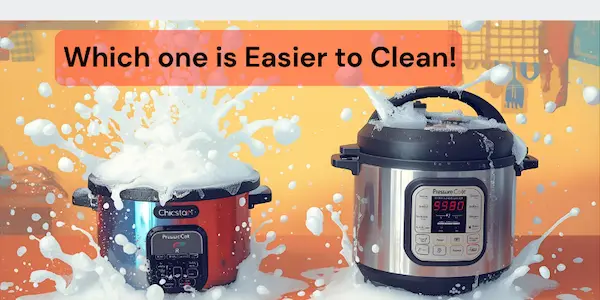
A great kitchen gadget isn’t just about cooking — it’s about how easy it is to use, clean, and keep safe. Here’s how both cookers compare in daily convenience.
Ease of Use
- Rice Cooker: Very beginner-friendly. Just measure rice and water, press start, and it takes care of the rest. Some models even keep rice warm for up to 12 hours.
- Pressure Cooker: Requires setting pressure levels and timers. Modern electric ones are easier, but still need attention to steam release.
👉 Verdict: Rice cookers are simpler; pressure cookers demand more control but give faster results.
Cleaning & Maintenance
- Rice Cooker: Has a non-stick inner pot and removable lid parts that clean easily with warm water.
- Pressure Cooker: Includes more parts — lid gasket, safety valve, and seals — that need regular cleaning and checking.
👉 Verdict: Rice cookers are quicker to clean; pressure cookers need more upkeep for safe use.
Safety Features
- Rice Cooker: Safe to use daily — minimal pressure and automatic shut-off prevent overheating.
- Pressure Cooker: Modern models come with multiple safety locks and pressure-release systems, but users must follow the steps correctly.
👉 Verdict: Both are safe, but rice cookers feel more worry-free for everyday use. While pressure cookers can cook rice quickly but it’s important to handle them safely. Check out our detailed guide on How to avoid pressure cooker accidents and follow key safety tips to stay safe while cooking.
In short, if you love convenience, the rice cooker fits your routine better. If you enjoy speed and multitasking, the pressure cooker might be your kitchen powerhouse.
Versatility & Extra Features
Both rice cookers and pressure cookers can do much more than cook rice. But the way they handle multiple recipes makes them stand apart.
Rice Cooker Versatility
A rice cooker can also steam vegetables, cook porridge, or make soups. Advanced models include multigrain, slow-cook, and cake modes for added convenience.
Still, its core strength remains perfect rice — every time. It’s best for those who want effortless, everyday cooking without too many adjustments.
👉 Verdict: Great for rice-focused meals and light cooking.
Pressure Cooker Versatility
A pressure cooker shines as an all-rounder. It can handle lentils, stews, curries, meat, and even desserts in record time.
Electric pressure cookers (like Instant Pot) have pre-programmed rice, soup, and sauté options — replacing multiple kitchen gadgets in one.
👉 Verdict: Ideal for those who cook a wide range of dishes and value time efficiency.
While both are handy, the pressure cooker wins for flexibility, but the rice cooker remains unbeatable for perfectly consistent rice with minimal effort.
Energy Efficiency & Cost Comparison
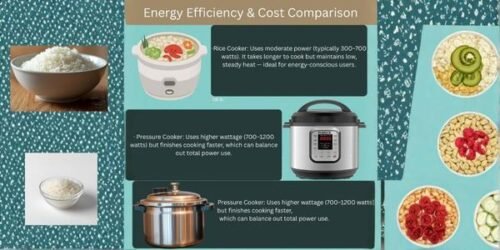
Before choosing your cooker, it’s smart to look at both energy use and cost. A small difference in power or cooking time can affect your bills in the long run.
Energy Efficiency
- Rice Cooker: Uses moderate power (typically 300–700 watts). It takes longer to cook but maintains low, steady heat — ideal for energy-conscious users.
- Pressure Cooker: Uses higher wattage (700–1200 watts) but finishes cooking faster, which can balance out total power use.
👉 Verdict: Both are efficient in different ways — rice cookers save power through gentle heating; pressure cookers save time through faster cooking.
Cost Comparison
- Rice Cooker: Budget-friendly, starting from $25 for basic models. Premium smart rice cookers can cost up to $150.
- Pressure Cooker: Costs a bit more, starting around $60 for manual types and $120–$250 for digital multi-cookers.
👉 Verdict: Rice cookers are cheaper upfront, while pressure cookers offer more features for the price.
If your main goal is affordable, consistent rice, the rice cooker fits perfectly. But if you want a versatile tool that saves time and replaces other appliances, the pressure cooker gives more value.
Let’s Make it Easy to Choose
Still unsure which one to buy? Here are a few simple tips to guide your choice based on your cooking habits and lifestyle.
1. Think About Your Cooking Style
If you mainly cook rice, go for a dedicated rice cooker. It’s easier, more consistent, and delivers perfect texture every time.
If you love experimenting with soups, curries, or stews, the pressure cooker gives more variety.
2. Check Kitchen Space and Usage
A compact rice cooker suits smaller kitchens and regular use.
Pressure cookers, especially electric ones, are bulkier but can replace several other gadgets — saving space in the long run.
3. Compare Maintenance Needs
Choose a rice cooker if you prefer easy cleanup and minimal parts.
Pick a pressure cooker only if you’re comfortable with regular lid and gasket cleaning.
4. Budget Wisely
Rice cookers are affordable; even good ones start under $50.
Pressure cookers cost more but give broader functionality — a smart buy if you’ll use it often.
5. Match Features to Your Routine
Look for features like a keep-warm function, a delay timer, or a non-stick pot in rice cookers.
In pressure cookers, check for safety locks, preset modes, and quick-release valves.
A small decision like this can make every day cooking smoother — it all depends on what you value more: simplicity or speed.
FAQs
A rice cooker is typically better suited for everyday rice cooking. Rice cookers give a more consistent texture and are set-and-forget. Pressure cookers cook faster and work for many dishes, but they often make rice softer. If your main goal is perfect daily rice, choose a rice cooker.
Yes — with practice and the right water ratio. Pressure cookers can produce excellent rice, especially brown or mixed grains, but they need correct timing and a release method. Test water ratios and use natural release for better texture; modern multi-cookers have rice presets that reduce guesswork.
No — ratios differ between devices. Rice cookers usually use a bit more water for fluffy rice; pressure cookers need slightly less because less steam escapes. Always check your cooker’s manual and do a small test for your rice variety to find the ideal ratio.
Often yes, but it depends on use. Pressure cookers use higher wattage but finish much faster, which can lower total energy per meal. For small daily portions, a rice cooker’s gentle heat can be efficient; for many dishes or large batches, a pressure cooker may be more energy-efficient.
Yes — both can handle brown rice well. A rice cooker needs more time and water for brown rice, but it ensures even softness. A pressure cooker cooks it faster and often gives a slightly stickier result. For consistent texture, the rice cooker wins; for quick meals, use the pressure cooker.
Wrapping Up: Rice Cooker vs Pressure Cooker for Rice
So folks, when it comes to the rice cooker vs pressure cooker for rice, it’s really about what you value most in your kitchen.
If you love light, fluffy grains with zero effort, the rice cooker is your loyal companion. It’s simple, safe, and always consistent.
If speed and versatility matter more, the pressure cooker is your all-in-one powerhouse, ready to cook rice, stews, or even lentils in minutes.
As someone who’s tested both, I’d say: go for a rice cooker if rice is your daily staple, and a pressure cooker if you want one tool for many recipes. Either way, both make life easier and meals better.
Keep exploring, keep upgrading — smart cooking isn’t just about gadgets, it’s about finding what truly fits your lifestyle.





- Be Respectful
- Stay Relevant
- Stay Positive
- True Feedback
- Encourage Discussion
- Avoid Spamming
- No Fake News
- Don't Copy-Paste
- No Personal Attacks
- Be Respectful
- Stay Relevant
- Stay Positive
- True Feedback
- Encourage Discussion
- Avoid Spamming
- No Fake News
- Don't Copy-Paste
- No Personal Attacks
